The Cat is Out of the Bag (Again): The Not-So-Hidden Business Model in SaaS
Business, SaaS June 1st, 2009
Forget software: itâs all about (your) data.
Hyper-growing Financial Management system provider and Quicken / MS Money challenger Mint recently raised eyebrows announcing their plan to sell anonymized aggregate customer data. Some reviewers were screaming, we saw bombastic titles like Personal Finance Startup Mint Wants To Sell Your Money Trail â but in reality the news wasnât earth shattering. You donât really believe your spending patterns are not dissected â aggregated â analyzed in every possible way and sold by your bank and credit card company, do you?
So nothing new â but a good opportunity to discuss the role of user data in SaaS business models â and there is more than outright sale of data.

Read more âŚ
Tags: aggregate data, benchmarking, business model, data ownership, data privacy, freshbooks, mint, saan, SaaS, xref
Disgusting
Startups February 13th, 2009
This fart-fight is just ⌠disgusting.

And hereâs what I really think of this monkey-business.
Tags: business model, fart, farting, iPhone, iphone apps, iTunes, web 2.0
Farting Our Way Through the Recession?
Misc, Software December 30th, 2008
Global warming. The U.S. losing its edge in science and technology. A growing income gap. And what are the best and the brightest working on?
-asked Tim OâReilly, Father-of-all-things-Web-2.0 at the Web 2.0 Expo in September.
Do you see a problem here? You have to ask yourself, are we working on the right things?
Some of the negative examples he cited were the Facebook application Superpoke and the popular iPhone app "iBeer," which simulates chugging a pint of beer. Has anything changed since OâReillyâs alert? Letâs see:
The most popular of 50+ (!) fart applications, iFart Mobile generated $10,000 a day at 99c per download until it got written up just before Christmas, then it exploded, bringing in $27,249 on Christmas Day. Dou think itâs jus a crazy name for a useful program? Nope: all it does is to make farting noises.![]()
Tapping into the Apple phone craze, accidental entrepreneurs rake in millions by creating popular applications.
-says the Washington Post in an aptly named article: The iPhone’s Golden Touch. At least Smule, the showcased company does not make fart noises: they have applications like virtual lighter, a virtual firecracker, a voice changer, a virtual wind instrument. They are on track to make $1 million this year, a buck a piece.
If this is not crazy, I donât know what is⌠Brian Greenstone, who has been writing (real) games for Apple computers for 21 years agrees:
It’s crazy. It’s like lottery money. In the last four and a half months we’ve made as much money off the retail sales of iPhone apps as we’ve made with retail sales of all of the apps that we’ve made in the past 21 years — combined.
Spending 99c a time does not feel like a big decision â yet it all feels like a gigantic waste. An it will get written up as showcases of entrepreneurship.
I would like to amend the definition of entrepreneurship to include the creation of something useful (yes, I know, Iâve just opened a Pandoraâs box, but âŚ). Letâs differentiate opportunity seekers (nothing wrong with that) from Entrepreneurs. Iâd like to stand on a soap box and yell: People, wake up! Donât you have anything better to do?
But my voice isnât loud enough. I thought Tim OâReillyâs was ⌠shall we heed his call to do something worthy? Make it a New Yearâs Resolution for 2009?
(Cross-posted from CloudAve)
Related articles by Zemanta

Tags: business model, fart, farting, iPhone, iphone apps, iTunes, web 2.0
Is Tivo Selling Out Their Customers?
Customer Service, Marketing / PR December 10th, 2008
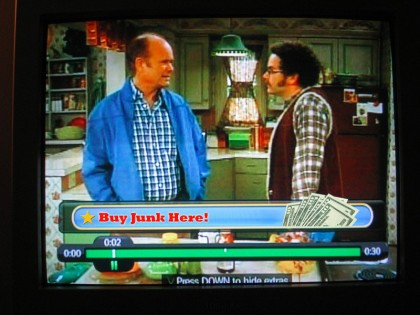
Zatâs Not Funny reports that Tivo is getting ready to push advertisements whenever you hit Pause on your remote.
Using the TiVo Pause Menu, advertisers can, for the first time, reach audiences with targeted product messages displayed within the pause screen of a Live or Timeshifted program. The feature provides an original solution for advertisers seeking to capture the fast-forwarding viewer. Itâs another example of how TiVo offers unique and different solutions for advertisers looking to get viewers to watch advertisements.
Another example of offering solutions to whom? Certainly not their customers.
Read more âŚ
Tags: ads, advertising, business model, Customer Focus, dvr, marketing, television, tivo, tv
Startups: Growth or Revenue First? The Case of Twitter and Yammer
Startups October 21st, 2008
The New York Times presents the perfect showcase for what I’ve been preaching in my recession / business models mini-series:
- turn to businesses
- stop poking around, create a valuable service
- charge for it (yes, revenue is not a crime)
The showcase compares Twitter vs. Yammer and their categorically different approaches to business.
Twitter is the leading micro-blogging service â they have a strong brand with zero revenue.
Yammer , riding on Twitterâs coattails has followed the exact opposite model: focus on revenues from Day One.
Is one model better then the other? Are they both sustainable, especially in a downturn?
Tags: business model, entrepreneurship, microblogging, revenue model, Startups, Twitter, vc Funding, yammer
Turn the Doom-talk into Constructive Business Model Ideas
Startups October 12th, 2008
Image via Wikipedia
TechCrunch Turns Into F**kedCompany 2.0 â says Dare Obasanjo.
Really? Tell me something I donât already know. Have we all forgotten that TechCrunch acquired FuckedCompany.com over a year ago? OK, that was just an April Foolâ s Joke , but you can really say TC is unprepared for a downturn â after all, they own FuckedCrunch.
OK, on a more serious note: I also said, way back in January 2007 that TechCrunch Did Not Build it; It Canât Knock it Down Either:
TechCrunch did not build this boom. Yes, a well-timed review helps a startup gain initial traction, but Mike does not make those companies successful: whether they make it or not, they do so on their own. And when they fail, they fail own their own merits, too. Failures are part of business reality, and reporting on them only makes TechCrunch balanced. Without it Mike would be just a biased cheerleader (something he was accused of in the past).
I still mean what I said there, except that in the downturn there will clearly be more failures, and it wonât always be on a startupâs âown meritsâ. Reporting on them is part of reality.
But what I really hope for is that TechCrunch and other influential blogs that are a strong part of the startup ecosystem will take a constructive approach, and instead of becoming doom-reporters they start discussing ways of survival â i.e. how to tweak oneâs business model to establish a healthy revenue stream.
Iâll have more on this soon.
Update: Iâm often amazed at the image selection Zemanta proposes. The word âtrainâ does not once occur in my post, yet it recommended this image of a train-wreck.
Tags: Blogging, business model, fuckedcompany, recession, revenue, Startups, techcrunch
Google Releases Zoho Mail with Offline Support
Personal Productivity, SaaS October 10th, 2008
Yes, you read it right: the first announcement of Zoho Mailâs general availability, with Google Gears-based offline support did not come from Zoho, but from the Google Gears team, which released this video discussing Zohoâa use of Google Gears, synchronization, the Marketplace and a lot more a bit prematurely:
Somewhat used to it (see TechCrunch Releases New Zoho Service: Invoice) the Zoho folks decided to play along and released their own announcement.
This announcement somewhat symbolizes the interesting dynamics between Zoho and Google: competitors, yet collaborators.  ReadWriteWeb is probably right:
But also Google probably sees Zoho less as a competitor at this point (even though Zoho does compete directly against Google Apps) and more as an evangelist for its technology – such as Google Gears.
First of all whatâs in todayâs announcement:
- Zoho Mail has been in private beta for over a year now. As much as we like to switch to native collaboration using web-based tools, email is still where most productivity workers spend 80+% of their time. Mail is the glue that brings it all together â so itâs important for Zoho to step out of background testing mode and make Mail publicly available. Itâs also an integral part of the Zoho Business Suite.
- Features: Itâs an email service (everyone gets a user@zoho.com email account) and an email program that can consolidate several other email accounts, Outlook-style. It combines old and new: supports hierarchical folders aâla Outlook as well as Gmail-style labels, chronological view as well as the threaded conversation views made popular by Gmail.
- Access anywhere, any time: Offline access is provided via Google Gears (for now Firefox and IE only), and itâs also available on the iPhone.
- Integrated Chat â this is another âglueâ application within the Zoho Suite, and several other features listed here.
So with all that, why am I unhappy? Iâm a die-hard Gmail fan, mostly for its productivity boosting features:
- Conversation threads
- Labels
- Search
Zoho Mail handles the latter two well, but I am not too happy with the way conversation threading works. My business conversations last weeks, include dozens of emails, and on a traditional mail system the threads are basically a pain to put together before responding to someone. Gmail handles it automagically, and as a side-effect, it presents a lot more information on itâs list screen – since the dozen individual emails are now compressed into one line.
But we all have different usage patterns. When debating the importance of threads, I looked at other Zoho Mail users whose conversations are typically one-off, so they wonât value threading feature at all. In fact not everyone needs productivity. Not everyone wants to go through a paradigm change.
AOL, YAHOO, Hotmail are the absolute web-mail market leaders,and they should do whatever it takes to keep their customers. Their mainstream users are corporate employees who use Outlook in the Office, whether they like it or not is irrelevant, they are used to it. When they go home, they may not email a lot. Some will check their emails daily, once a week, or less. They want a personal email that resembles to what they already know. For them familiarity is more important than productivity.
As much as I hate to admit it, I am NOT the mainstream Zoho customer. I am probably more a part of the TechCrunch 53,651 (even though itâs 1M now) than the mainstream customer base Zoho targets.  And if it wasnât clear before, the current crisis brought home the message loud and clear: only businesses with real revenues survive. Which probably means that for all my yelling and screaming, Zoho is quite right coming out with an email system that meets the needs of businesses who actually pay for it. After all, this is what enables them to offer all the other apps I like for free. And I like free. ![]()
(Disclosure: Iâve been a long-time Advisor to Zoho and they are exclusive sponsor of my main gig, CloudAve. This article has been cross-posted there.)
Related articles by Zemanta
- Zoho Mail now online – and offline thanks to Google Gears
- Zoho Mail Gets Offline Support via Google Gears – Ahead of Gmail
- Zoho Mail: Now With Offline and Mobile Support
- Zoho Mail: Mobile, offline, and out of beta

Tags: business model, Collaboration, email, gmail, Google, google gears, iPhone, offline access, zoho, zoho mail
No, the Sky is Not Falling in Startup-land
SaaS, Startups October 9th, 2008
Lotâs of noise today, RIP Good Times, ITâS OVER! POP GOES THE BUBBLE, Sorry, Startups: Party’s Over etc.  I think the panic is overdone.
Sure, a lot of startups will fall â and some of them would have done so without a recession anyway. Times are officially tough, but the truly strong businesses will survive, and some of the Web 2.0 whiz-kid baby-CEOs will come out of this as battle-hardened Entrepreneurs.
Talk about Executives⌠some can wreck the business on their own, they donât need a crisis: see Entellium wrecked by fraud.
Finally some startups think they can keep on re-architecting forever â see NetBooks, ViewPath (the latter just came out with a new product though.) Good luck to them⌠wonder if their market runs awayâŚ
These are some of the thoughts Iâm discussing on CloudAve today â read more here. Even better, grab the feed here.
Update: Want to get off the “Sky is falling” treadmill? Need inspiration? Find it here.
Even better, get really inspired at Defrag. Use discount code zoli1 to get $300 off.
.
Tags: business model, defrag, entellium, entrepreneurship, management, netbooks, recession, SaaS, Startups, vc Funding, venture Capital, viewpath
How Software Can Be Resilient to Recession
Business, SaaS, Software September 23rd, 2008
Are we heading into Recession? The âBig Râ talk of early this year quickly subsided, economic growth returned, the markets appeared to vindicate the optimists. US Presidential Candidate John McCain repeatedly said the economy was fundamentally strong⌠until just days ago, when he quickly switched to declaring a crisis. The Wall Street Journal says weâre in the Worst Crisis Since ’30s, With No End Yet in Sight.
I donât claim to be an expert economist, so whether the Big R is looming is not my call â but if you believe weâre in a strong economy, I have a bridge to sell you. Letâs just focus this discussion on how Software businesses can survive in a financial crisis, which is undeniably here.
Not all will survive, and itâs probably healthy they wonât. Tim OâReilly, Father-of-all-things-Web-2.0, asked the question at the Web 2.0 Expo last week:
Global warming. The U.S. losing its edge in science and technology. A growing income gap. “And what are the best and the brightest working on?” O’Reilly asked, displaying a slide of the popular Facebook application SuperPoke, which invites you to, among other things, “throw sheep” at your friends.
“Do you see a problem here?” he posed, showing another slide of the popular iPhone app “iBeer,” which simulates chugging a pint. “You have to ask yourself, are we working on the right things?”
The poster-child of the Web 2.0 boom may very well become the symbol of what went wrong:
- useless
- consumer-only
- ad-driven
Actually, the problem is not what they do, but how seriously they were taken. Will Price, a very smart VC said long ago:
It may well be that Slide raising $55m from mutual fund companies at $500m+ pre-money will be the âwhat were we thinkingâ moment of the current cycle.
Iâm glad they did not go public, at least not a lot of people will get hurt holding the bag.  But enough of whatâs wrong, hereâs what works:
- go where the money is, and thatâs businesses (âEnterpriseâ vs. consumer, even if it means small business)
- deliver value â useful functionality that improves business
- charge for it â companies actually prefer to pay for reliable, good service.
The last point brings up the price issue. Credit will dry up. Whether weâll officially declare Recession or not, the fear of the Big R is enough for corporate budget cuts, the disappearance of any CAPEX spending. Even worse, an entire sector almost disappeared as IT buyers. Did you know that Lehman Brothers spent over $300M on IT in just the last quarter, right before declaring bankruptcy?  How do you sell in this environment?
The after-bubble nuclear period of âno IT spending at allâ found me at a startup in 2001-2003. We did not exactly hit it big, but did not go under, either, and thatâs because our model allowed us to get in the door way below the threshold that would have required higher authorization. Not classic SaaS, rather SES (Software Enabled Service), we were essentially data providers and often got into an âenterpriseâ account at $3k for the first month ⌠eventually ramping up to annual $60-$100K.  Anyone familiar with Enterprise Sales knows the term Economic Buyer: typically getting involved later at the sales cycle, approving or nuking the deal. Well, we saw no Economic Buyer: being under the threshold, we sold to the User directly.
Of course my little business is not the only proof: Salesforce.com & WebEx thrived during the last recession. The secret is the business model: pay-as-you-go. SaaS offers lower risk to enter, no initial cash layout, the subscription fees come out of OPEX vs. CAPEX, and is often approved by the User, not the mysterious Economic Buyer. The barrier of entry is much lower: once youâre in, itâs up to you to grow.
In fact I suspect the looming downturn will accelerate the structural changes in the software industry: SaaS players will thrive, traditional on-premise vendors will shrink, many will disappear.
That leaves a final point to discuss: financial solvency. For startups, it will be increasingly hard to find investors. For larger businesses the lack of late-stage investment, the credit crunch may be a serious impediment to expansion.  Discover the beauty of bootstrapping â you actually get to do what you believe is right for your business, not what your Board tells you. Do less, take small steps. Frugality is key to survival. Small is beautiful will get a new meaning.
In summary, Software businesses that combine good old business sense: frugality, spending wisely, delivering value to businesses and getting paid for it, with a new business model, SaaS are likely winners in the downturn. The rest are playing musical chairs. (Oh, and the bridge is still available)
(This post originally appeared on CloudAve. Keep informed by grabbing our feed here.)
Related articles by Zemanta
- Goldman, Morgan Stanley Become Bank Holding Companies as Government Tries to Pass Bailout
- Wakie Wakie Web 2.0, Daddy Says It’s Time To Earn A Living
- O’Reilly: Stop throwing sheep, do something worthy
- O’Reilly signals Free Web 2.0 party is over?
- Why it will be very different this time
- Surviving the Financial Crisis
- The Financial Crisis: A Survival Guide for Startups
- Recession Proof Software? Try SaaS, Managed Services and Open Source
- Software for the âRecession Dietâ
Tags: bubble, business model, cloud computing, enterprise sales, Enterprise Software, entrepreneurship, On-Demand, recession, SaaS, salesforce.com, Software, Startups, webex
![Reblog this post [with Zemanta]](http://img.zemanta.com/reblog_e.png?x-id=e687654d-e89b-4343-9024-a286bbbba726)

![Reblog this post [with Zemanta]](http://img.zemanta.com/reblog_b.png?x-id=0e4c7111-f71b-45cd-98b4-98f896e8ed17)
(OK, I sinned. Mea Culpa. I’ve just cross-posted an entire article, which is not the best behavior. But it’s not every day that I
P.S. The CloudAve platform is not exactly in nice order yet. It’s work-in-progress.

Zoli Erdos