Learn From the Gmail Fiasco: You Need Redundant Copies of Your Email–Don’t Worry, It’s Painless :-)
Personal Productivity, SaaS February 28th, 2011
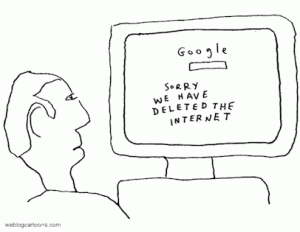
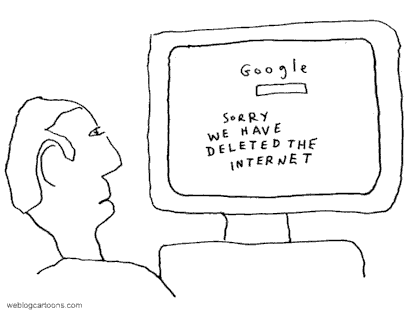
A few hundred thousand (numbers range from 150k to 500K) Gmail and Google Apps users had the scary experience of losing ALL their email content yesterday. Their account was accidentally “reset”. Google acknowledged the error, and issued a statement that they are working on restoring “lost” content.
Let’s stop and think here a minute. Is your lifetime’s worth of information sitting in email? Do you have redundant backups / copies? (there is a difference, as we’ll see). If not… stop everything, and rush to fix it.
There are a few steps anyone can take easily to have redundant copies of their entire email account – I don’t mean just backup to restore from, but live copies you can switch to any time.
- Keep an offline copy in an email client. I don’t use email clients anymore, much prefer the native Gmail UI. But even if you don’t normally use email clients, you can still occasionally start Outlook, Thunderbird, Mac email…etc. Fetch everything via IMAP, then make redundant copies.
- Auto-copy to another Google account. Set up an account you won’t actively use – its sole purpose is to fetch email from all your other email accounts (Google or external) via POP and serve as an archive….
Tags: backup, CloudAve, data backup, email, Email client, gmail, Google, Google Account, google apps, hotmail, IMAP, Outlook, thunderbird, yahoo mail, zoho mail
Why Google’s Storage Pricing is Not a Rip-off
Personal Productivity, SaaS August 10th, 2007
If you have a Gmail account, check the ever-growing counter at the bottom: it stopped counting. My Google apps accounts are frozen at 2048MB, non-branded gmail accounts at 2886MB. (I was wrong, the counter still runs. Thanks for the correction, Tony ) Which is not to say you can’t get more storage, as we know yesterday Google announced their pricing:
Some say it’s a rip-off: I tend to disagree… or let’s just say it depends what other Google services will be covered by the “shared storage”.
It’s already more than just Gmail, so it’s not fair to compare it to Yahoo Mail, which offers unlimited storage (who really needs unlimited email?). Besides, productivity-minded hardcore Gmail fans who find Yahoo mail inferior won’t switch just for the sake of free storage. Features count, after all. Talk about which, you do have to pay to get some of features, e.g. POP access on Yahoo Mail – that’s free on Gmail.
The Flickr comparison isn’t fair, either. Granted, if all I want is unlimited photo storage, a Flickr or Zooomr Pro account is a better deal – but Google has more goodies in their bag.
Think of what happens if when Docs and Spreadsheets – or whatever the eventual name will be, when it includes presentations, JotSpot ..etc. – will become all covered by the shared storage package. Now you have a complete productivity suite on the Web. Not counting photos, music and videos, it’s still hard to reach stratospheric storage requirements – but as you use Word, Excel less often, and most of your “new” stuff is in the cloud, you may start wondering if you should have ALL your documents uploaded, searchable, linkable, backed-up – the whole enchilada.
Both Yahoo and Google have a range of services, and very different pricing policies. Comparing storage on its own is misleading: we should look at the overall value we get from a full productivity suite + storage. If Google chooses not to charge for the apps, only storage, it’s not a bad combo, overall you can get more functionality for your $ then with Yahoo. $20 a year ($1.66 a month!) does not seem that much. By the way, you’re likely spending more on Microsoft Office now
Related posts: Andy Beal’s Marketing Pilgrim, Search Engine Land, Between the Lines, Computerworld, ParisLemon, Insider Chatter, Google Blogoscoped, Googlified, Mark Evans, Geek Speaker, VentureBeat, Web Strategy, jkOnTheRun, Googling Google, Damien Mulley, Download Squad, Mashable!, mathewingram.com/work.
Tags: gmail, gmail storage, Google, google docs & spreadsheets, office 2.0, web 2.0 business model, web office, yahoo, yahoo mail


Zoli Erdos