Archives for 2007

post

Prom Queen or Justin.tv?

Michael Arrington apparently prefers Justin.tv to Prom Queen.  Oh, well, this is California smile_wink

(photo: TechCrunch

(photo: ValleyWag)

Ok, just kidding about Mike.  How about you? 
Cast your vote:


P.S. On a more serious note, Ustream.tv, founded by friend Chris Yeh is looking for a CTO/VP Engineering.
 

post

Are Philanthropy and Entrepreneurship Compatible?

  • “Odd thing for an office ’style’ company to go into – cartoons”

  • “Brilliant strategic move or jumping the shark? I can’t decide.”

  • “At least all their eggs arent in online software; office”

  • I understand doing these things because you get people creating content that you can then monetize…”

The reactions to TechCrunch announcing ToonDoo, a comic strip creator were rather mixed – just as I expected. Not so much because of tool itself, but because of it’s relationship to Zoho, the Granddaddy of the Office 2.0 market. Here’s the CEO’s explanation:

unproductivity 2.0

Joke apart, ToonDoo certainly isn’t part of the Zoho Suite, and to dispel some of the myth, it’s not about keeping eggs in different baskets, and there are no evil monetization plans either.

I’ve always been fascinated with what really drives entrepreneurs. As Advisor to Zoho I got to know some of the team, and have been planning to share some of my thoughts for a while. Zoho is just one, albeit the most fashionable brand of a larger company, Adventnet. Adventnet is not a “hot name” like Zoho – even their website looks boring. But their product list is over a hundred items long. “Boring”, reliable, solid cash-cows. smile_wink

They are not a startup by any means: they have been in business for ten years, organically growing to 600+ employees and millions of dollars in revenue (without outside investment). Yet working with them feels like working with a startup: in the US they have a team of about 20, the key feature in the office is a pool table, although they are hardly ever in, often working remotely.

The solid position, and being self-funded allows them to do a few things that don’t directly fit business their strategy – they just like “doing good”.

One of these non-business projects funded entirely by Adventnet is Jambav, a site offering games and educational tools for children, ranging from toddlers to preschoolers, as well as resources for kids with special needs, (Update: read Scoble for some background) and community, forum, blogs for parents. Everything at Jambav is free, and so is their latest creation, ToonDoo. The Jambav team realized that us, “grown-up kids” can also use it, so they ended up releasing it under a separate brand.

Education is another subject CEO Sridhar Vembu frequently thinks and writes about:

He has a personal interest in the subject, having “wasted” 4 years getting his PhD in Princeton: “I actually had to unlearn a lot, to be in business. And I didn’t particularly enjoy the PhD experience either. If I were to go through life again, I wouldn’t repeat that PhD, that’s for sure.

He puts his money where his mouth is: he launched “Adventnet University” in India, bringing in disadvantaged teenage kids and putting them through 2 years of education, with a strong engineering / software focus. Is this all altruism? Probably not. Adventnet is hiring a lot of engineers and some will likely come from their own training program. One does not have to be entirely altruistic to do philanthropy. For these kids, who otherwise would have no hope of ever going to college, “Adventnet University” is a life-changing event. See fellow Enterprise Irregular Vinnie Mirchandani’s thoughts here.

But I am trying to make a bigger point here, so let me move on to another company now – one that I have absolutely no business relationship with.

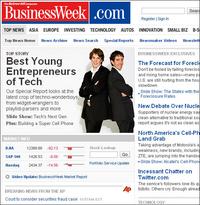
A good year or so ago Atlassian was not a widely talked-about name, although they were already the market leader in the Enterprise Wiki space, and prior to that had achieved phenomenal success with their first product, Jira. Without the luxury of spending VC money, they had their priorities straight: first get the products right, let them sell on their own strengths, then start spending on marketing and PR. After financial success came recognition: they keep on winning awards, the Founders became Entrepreneur of the Year and are now featured on the cover of Business Week.

Mike Cannon-Brookes, Co-Founder and CEO is an avid blogger who openly talks about “life at Atlassian”. It’s through his blog that I found out about their commitment to philanthropy. Every employee can spend 6 workdays a year on their favorite non-profit or charity. Is that a big deal? Well, considering an average of 220 workdays a year, it translates to 2.75% of their productivity. Salesforce.com is known to devote 1% of revenues to charity. I am not underestimating that 1%, but it’s spent with a stroke of a pen… whereas in Atlassian every employee is personally involved. (Compare that to my experience in a very Big, very Blue company, where management kept on publishing reports on employee contribution to United Way (the only choice) until the desired quotas were achieved… ) Update: I stand corrected, Salesforce.com employees can also donate 1% of their work-time.

On a personal side Mike issued a Kiva Challenge. Technically speaking, Kiva is not charity, handing out micro-loans to small businesses – but these are interest-free, high-risk (?) loans. One could say it’s a very “inefficient” process: the loan amounts can be as little as $25, and typically not more than a few hundred dollars. Managing it, and – like Mike does – soliciting other lenders, matching their contributions is time-consuming, but I’m sure as a true Entrepreneur, Mike actually enjoys it. Now, the money could just be given to a large charity, and disappear in the labyrinth of bureaucracy, but helping small businesses take off does more good in the long run. “Give a man a fish and he will eat for a day. Teach a man to fish and he will eat for a lifetime.”

I could cite more examples, but this story has to conclude at some point.smile_embaressed

I admit I am biased, I do like these companies, and probably write about them more often than others.

There are business reasons: they both are leaders in their market, not only have best-in-class products but also provide excellent, personal support and are very transparent about business, strengths, weaknesses, even bug reports. But other than the business criteria, they are also just a bunch of “likeable” people, and I think their non-business, charitable activities play an important role in that. I’d venture to say that everything else being equal, as a small business I’d probably prefer buying from such a “likeable” vs. one with a great product, but with aggressive sales, arrogant support, and generally “unpleasant” people.

What do you think? Is “doing good” a luxury, does it just serve personal satisfaction, or does it have a place in business, especially in startups / emerging businesses? On the other hand, if there is indirect business “payoff”, is it just an investment, or still a philanthropic act?

Update (4/8): Talk about the importance of buying from a “likeable” company, check out: I Canceled My Basecamp Account Today.

post

Technorati vs. Google Blog Search and the Conversation

Mirror mirror on the wall, which blog search is best of them all? – asks Robert Scoble.  My answer is very simple:

Technorati has by far more features, they continue to be the innovation leader. It is because of these features that I force myself to use Technorati, day by day – but it’s a painful experience (despite availability graphs Dave Sifry likes to quote).

Google Blog Search has one very convincing “feature”: it works. Always. And fast. 

When I say fast, I mean the speed of accessing data: it’s instantaneous, vs. the looooong wait for Technorati.  How fast the two engines index new blog posts is a different matter – but to me it’s secondary.   Scoble’s example clearly shows Technorati as winner:

Technorati for videobloggingweek2007. 147 results.

Google Blog Search for videobloggingweek2007. 76 results.

However, checking those very same links after a while shows:

Technorati for videobloggingweek2007. 183 results.

Google Blog Search for videobloggingweek2007. 209 results.

Google is known to quietly add features without major announcements.  The “biggie” to me is that Google Blog Search now finds comments left on any blog.  Everybody says blogging is a conversation, yet half the conversation has been impossible to find so far. CoComment, co.mments are nice tools, but blog search engines have largely ignored comments until now.  I’d say this is the first feature showing Google “out-innovate” Technorati.

I’m  not sure Technorati cares a lot about head-to-head comparisons.  After all, they no longer want to be the blog search company – they aim to become a media company.

Update (4/3): TechCrunch thinks Technorati’s doing a mating dance.  Since I repeatedly called for a White Knight to acquire Technorati,  I’d be quite happy to see this mating dance work…


post

TechFold, Who Are You?

Two-day-old blog TechFold appears to be focusing on technology, but it’s (anonymous) author knows a thing or two about marketing, too: write a good quality post about a company headed by a well-read A-list blogger, expect him to respond,  sit back and wait for the readers. smile_wink

So far it worked, I’m sure hundreds of readers follow Jeff Nolan’s response and his link to TechFold’s  inaugural post, 5 Suggestions to make Teqlo a Survivor.  Hats off to Jeff for the transparency in his response – he basically admits early strategic mistakes and outlines the course of correction:

“I’ll be very candid in saying I think we made a strategic error in trying to make the Builder an “everyman” platform that doesn’t have enough meat on the bone to appeal to the more technical audience who actually does care about it. In other words, we built the Builder for an audience that is largely not interested in using it, per the previous point, so now we’re in a position where we need to add more complex feature sets in order to make the Builder more appealing to the techie crowd, but in reality what this comes down to is exposing more of the complexity that we tried hard to cover up.”

It’s a good conversation, and if the inaugural post is any indication of the quality of the blog, it may very well be one worth subscribing to.  Except … I really, really don’t understand the anonymity. I’ve previously stated that Respect Must be Earned Even in the Blogosphere – but that was about a cowardly attack-blog.  TechFold appears to be decent, critical, but positively so.  Please, please, dear TechFold author, whoever you are, “come out” and continue writing your blog with your “shields up”.  Your About section is a decent mission statement. It just needs a name. ( a photo, perhaps?smile_shades )


post

Morning Coffee – Enough for All of Us

A new world record from Panama City: 300 pounds (136kg) of arabica coffee used to brew 750 gallons (2840 litres) of coffee, in a mug 2.75 metres by 1.6m over four hours.

The record will be submitted to Guinness World Records this month. The previous Guinness record was held by the US for brewing 660 gallons (2500 litres) in New York in 1994.

Hm.. this should be enough to get us all supercharged on Monday morning 🙂

Note: This is *not* an April Fools Day joke.


post

FuckedCrunch to Launch … Not a Good Sign

 “FuckedCompany first went live in 2000, chronicling failing and troubled companies in its unique and abrasive style after the dot com bust. Within a year it had a massive audience and was getting serious mainstream press attention. As the startup economy became better in 2004, much of the attention the site received went away.”

The attention did not quite disappear: it just shifted to TechCrunch as the boom picked up.  Now they all come together: TechCrunch acquired FuckedCompany.   Seemingly logical: Editor Mike Arrington has for some time maintained a DeadPool.  While some considered it a cynical move, I always thought it was part of providing a full picture of startup-land. I suppose the DeadPool will soon be merged into FuckedCrunch.

The transaction itself, and Mike’s explanation are not exactly bullish signs for the startup world.  In fact it very much looks like Mike hedges the bets.

There’s another notable point “hidden” in today’s announcement: it was a 100% stock transaction.  Meaning: TechCrunch has *stocks*.  The only other reference I’ve noticed before was a few days ago, when Mike hinted he would offer stock options to bloggers-for-hire.  Add to this the recent hiring of M&A hotshot Heather Harde as CEO and it’s not that difficult to see that bubble or not, Mike Arrington is setting the stage for at least one more lucrative exit…smile_tongue

Update (3/31): Of course all if this may just be an April Fools’ joke, whether FC was actually acquired or not.   As a matter of fact, it may have started as a joke that will materialize anyway…


post

I Want Powercast Stock

 Too bad I can’t buy it  – it’s a private company.  Powercast makes the old dream of wireless power true.
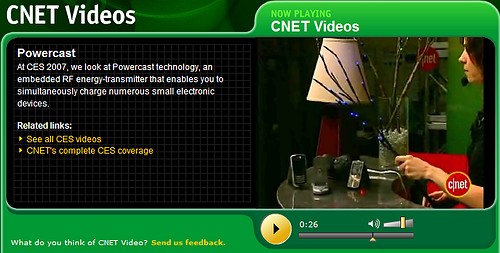
This is going to be huge. The company has agreements with 100 or so OEM partners, and the first one bringing products to the market is Electronics giant Philips.

Powercast owns the patents on their technology, it’s approved by the FCC – perhaps too good to be true?    Ben thinks it’s an April Fools’ joke come early.  Well, if it is, it started early, having won a CNET award at CES 2007. Watch the CNET video here.

My bet is on Powercast. Too bad I can’t invest in it.. one day this will be Powerstock. lightbulb


post

Panda is Baaaack

And it’s an ugly one. For a second when I saw the Infoworld article, I thought it was Panda Software again.

I had a little clash wit Panda, makers of anti-spam software over – would you guess? – spamming me unstoppably.  It was so bad that even after a PR manager from Panda contacted me and personally intervened the spam would not stop.

Eventually I find a solution: set up an autofilter to forward the Panda-spam to the manager in question (poor victim) and delete my own copy.  

Learning from this I came up with a creative way to fight at least some of the spam we all receive.  It only works with otherwise legitim products where you can identify not the spammer, but the company whose product or service is being pushed.  Find the email address of a company executive; send a polite email telling them from now on you will forward all their spam until they can stop it; then set up an autofilter to do just that: forward all spam to the individual’s email address, deleting the original from yours.

(Please note, I’ve only said it’s a creative way, as a theoretical approach,  I have no clue about legal ramifications, therefore am not recommending you follow this method)

This time around Panda is a different beast though: it’s a worm, the creator of which is now arrested in China. To make amends, he agreed to release the removal software.  Only problem is: it does not work.  I guess it easier to cause damage then fix it.

The “authority” that determined the worm-removal software is useless was none other but Anti-virus maker … Symantec.  Now, wouldn’t it be a nice way to make amends for “old crimes” if Panda Software came up with the way to kill the Panda Burning Incense worm? smile_speedy

Update (4/19): Now, a third kind of Panda is here, too. But this one is better 🙂 

post

Feeling the TechCrunch Effect

TechCrunch linked to my Gmail story.  Thanks, Mike!  I think I know how it happened smile_regular

techcrunch effect (create your own cartoons at ToonDoo

Update: TechCrunch just covered ToonDoo, which launched this morning.


post

SVASE VC Breakfast in San Francisco with Partech International

I’ll be moderating another SVASE VC Breakfast Club meeting this Thursday, March 29th in San Francisco.  As usual, it’s an informal round-table where 10 entrepreneurs get to deliver a pitch, then answer questions and get critiqued by a VC Partner. We’ve had VC’s from Draper Fisher, Hummer Winblad, Kleiner Perkins, Mayfield, Mohr Davidow, Emergence Capital …etc.

These sessions are a valuable opportunity for Entrepreneurs, most of whom would probably have a hard time getting through the door to VC Partners. Since I’ve been through quite a few of these sessions, both as Entrepreneur and Moderator, let me share a few thoughts:

  • It’s a pressure-free environment, with no Powerpoint presentations, Business Plans…etc, just casual conversation; but it does not mean you should come unprepared!
  • Follow a structure, don’t just roam about what you would like to do, or even worse, spend all your time describing the problem, without addressing what your solution is.
  • Don’t forget “small things” like the Team, Product, Market..etc.
  • It would not hurt to mention how much you are looking for, and how you would use the funds…
  • Write down and practice your pitch, and prepare to deliver a compelling story in 3 minutes. You will have about 5, but believe me, whatever your practice time was, when you are on the spot, you will likely take twice as long to deliver your story. The second half of your time-slot is Q&A with the VC.
  • Bring an Executive Summary; some VC’s like it, others don’t.
  • Last, but not least, please be on time! I am not kidding… some of you know why I even have to bring this up. (Arriving an hour late to a one-and-a-half-hour meeting is NOT acceptable.)

Thursday’s featured VC is Nicholas El Baze, General Partner at Partech International. For details and registration please see the SVASE site.

Here’s a participating Entrepreneur’s feedback about a previous event.

See you in San Francisco!