Oops, They Fired All Their Workaholics

Startups March 8th, 2008

Wow, quite a firestorm on a weekend over whether startups should hire only workaholics or not. It’s tip #11 on Jason Calacanis’s How to save money running a startup list that ticked off many readers:

Fire people who are not workaholics. don’t love their work… come on folks, this is startup life, it’s not a game. don’t work at a startup if you’re not into it–go work at the post office or starbucks if you’re not into it you want balance in your life. For realz.

The edits show how Jason re-wrote this point after harsh criticism like Calacanis Fires People Who Have A Life on TechCrunch and Fire the workaholics by 37Signals. I don’t think he had to edit it, anyone who had been at a startup, who understands startup dynamics should “get it”.

He is talking about the need to have highly passionate team members, who at a certain stage of their life and the startup’s life are willing to - and happy to - shift their priorities. You can’t force people to be workaholics, all you get is slaves in a sweatshop, and that not only causes burnout, it does not produce quality results anyway. David at 37Signals is right:

If your start-up can only succeed by being a sweatshop, your idea is simply not good enough. Go back to the drawing board and come up with something better that can be implemented by whole people, not cogs.

Agree. But great founding teams are often made up of workaholics - it has to come from the fire within, not forced. These guys locked up in a live-and-work apartment probably did not have 8-hour workdays, yet didn’t look too unhappy. A year later they are growing, picked up two rounds of funding, have 20 employees and even put TechCrunch in the toilet.smile_wink I don’t expect their 20th employee to be just as passionate as the Founders, but it can’t be a 9-5 type person either. At this stage they still need driven Team Members, not simply employees.

Most startups that grow to a certain point will lose this team atmosphere at some point. They will start to hire more “regular employees”, many of whom are opportunity seekers, in for quick ride, ready to jump ship any time. Too bad, but it’s a fact of life.

Not everywhere, though. 37Signals is still a small team (by choice) but not really a startup anymore. They seem to have found the golden balance between work and life, having introduced 4-day workweeks, funding team members’ passions, be it flight lessons, cooking classes…whatever. I don’t think they whine if (when) the occasional crunch comes. Another “startup” (not really, anymore) I often write about is Atlassian: at $30M revenue and 130 employees they still preserve a unique culture, do a lot of programs together, and generally working there is a lifestyle, not just employment.

The above two have something in common, other than having good products: they did not take VC investment. They can pretty much do whatever they like. Maintaining a great team is no just a means to business, it’s part of their ultimate purpose.

The weekend firestorm comes completes a full circle: in a second TechCrunch article Mike Arrington comes to Calacanis’s defense: Startups Must Hire The Right People And Watch Every Penny. Or Fail. This is a very good article, I wholeheartedly agree with it. And while at it, let me also refer you to Startups: Executive Hiring Challenges or Beware of the Suits.

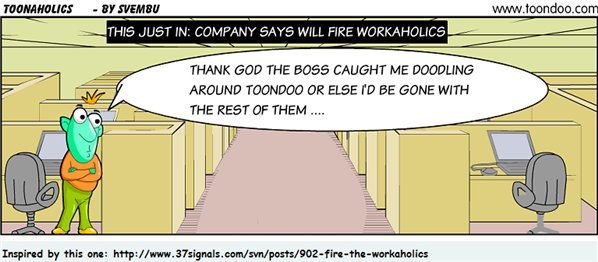
On a lighter note, the CEO of another self-funded former startup, Zoho apparently heeded 37Signals advice, and fired all his workaholics.

(Not really… Watch out for a major product announcement next week.smile_wink)

Tags: , , , , , , , , , , ,

Morsels from the Crunchies, or Whatever Happened to Business Software?

Bay Area, Blogging, Software, Startups January 21st, 2008

Now that The Crunchies, the Internet Startup world’s equivalent of the Oscars are over, the winners announced, a lot of champagne consumed, let me go back to a few thoughts that have been on my mind throughout the whole show.

First of all, it was nice to see so many startups recognized, meet familiar faces again, and I join the chorus in thanking TechCrunch, ReadWriteWeb, VentureBeat and GigaOm for putting the show together. Special kudos to Om Malik for coming only three weeks after his heart attack.

Second, I can’t help but think that some of the categories were .. well, almost deterministic, leaving zero chance of winning for the “little guys” lumped together with a giant. Right out of the gate, the first category, Best gadget/device: iPhone, Kindle, Ooma, Pleo, Wii. C’mon, did anyone doubt for a minute the iPhone would win? Or look at the Best mobile startup, where the finalist were AdMob, Fring, Loopt, Shozu, Twitter. Oh, please, 3 relatively unknown names against Twitter, a mega-phenomenon… smile_sarcastic

The other thought I’ve been pondering ever since the show is whatever happened to business software? The Crunchies were yet another proof that “enterprise isn’t sexy“: this was all about consumer-glitz, with a few startups who cater to businesses. That said, at least there was an Enterprise startup category, and I was really glad to see my friends at Zoho win it. Although I wholeheartedly believe they deserve it, this was by far not a slam-dunk category, with Zoho and 37signals, which has a religious cult-like fan-base being the two chief contestants.

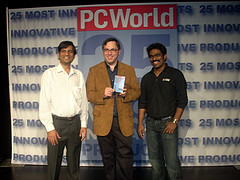
Perhaps the Zoho team felt a bit of extra satisfaction, given that 37signals originally questioned their viability, and called them copycats rather than innovators. Well, the innovation debate definitely ended a few weeks ago, when PC World picked Zoho’s Notebook as one of the 25 Most Innovative Products of the Year. While the Crunchies were clearly a popularity contest (with over 100,000 votes) PC World’s list was compiled by professionals. This list was notably full of gadgets, and the only other software products preceding Zoho were Google Gears and the Facebook API.

Back to the Crunchies, Enterprise category, 37signals and Zoho are diametric opposites in many ways: 37signals product philosophy is all about simplicity, “products that do just what you need and nothing you don’t” while Zoho believes in functional richness, and their customer service attitude is quite different, too. Yet I believe they are both good companies, and there’s a clear demand for their products, which is well proven by the hundreds of thousands of loyal customers. Neither of them are really Enterprise software companies though. 37signals caters for what they call the “Fortune 5,000,000″ and Zoho clearly stated their mission to be the “IT for Small Business” - not that a subset of their portfolio, the Office Suite could not become Enterprise-ready, but for now it’s not their primary focus. And focused they are …

I think the Crunchies used the term Enterprise quite liberally - I would have called this category Business Software. Now, if the names IBM, HP, SAP, Citigroup, Boeing, BMW, Shell, McDonalds, Pfizer sound familiarsmile_wink, I’m sure you agree that the company who claims these and others customers is truly an Enterprise Software company. Yet Atlassian ended up in the International category, to their bad luck, as they got paired up with Netvibes. The two are apples and oranges. Atlassian is a very successful company, but the people who buy enterprise software are not the types who hang out at the Web 2.0 tech blogs or vote for the Crunchies; Atlassian stood no chance against Netvibes, with their tens of millions of individual users, all potential voters in this popularity contest.

What do three so different companies, Atlassian, 37signals and Zoho have in common? All three are bootstrapped, fast growing, financially successful and follow the “old-fashioned” business model of making good products and charging for it. I could not help but think of these guys while listen to the announcement of the Best Bootstrapped startup category, decided between FriendFeed, PoliticalBase, ProductWiki, Techmeme, UpNext. Or while listening to the panel discussion moderated by Dan Farber, where Matt Marshall expressed his astonishment how far the ad-based business model propelled us, and was wondering if advertising as the only business model would work in the downturn (no R-word!). If we had to pick the survivors of a potential downturn, these three companies are certainly safe candidates. The good old business model of charging for your product, which, incidentally, your customers love works wonders. smile_regular

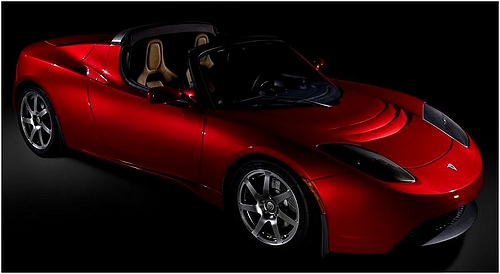
Of course there was a lot more to the Crunchies, but it’s been all more then adequately covered, and I wanted to focus on business software now. But…well, I am a guy and guys love cars… so I have to mention the Cleantech category, won by Tesla, makers of this beautiful electric sports car. The only problem is, the car does not exist yet, release date has been pushed out repeatedly, the company had to go back for repeat funding, just fired a bunch of people, including the VP Manufacturing, Lead Engineer if the motor team… but hey, why not give them the Award and keep on dreaming (about the car). smile_embaressed

Update:  Apparently I am not the only one questioning the rationale of some category assignments at the Crunchies; read CenterNetworks on user-generated content.

Tags: , , , , , , , , , , , , ,