
 (OK, I sinned. Mea Culpa. I’ve just cross-posted an entire article, which is not the best behavior. But it’s not every day that I launch a new group blog – so consider this my shameless self-plug, and please subscribe to the feed.
 )
)
We must be a crazy bunch on a suicide mission. Why else would we launch a new blog focused on Cloud Computing and Business, when it’s just a fad that will collapse in two years?
Harry Debes, CEO of Lawson Software is a respected Enterprise Software industry veteran, but I’m afraid for all his achievements he’ll go down in history as the man who grabbed headlines with a fatally wrong call. Of course not all wrong calls hurt one’s reputation: IBM’s Thomas Watson is still an industry legend despite the famous quote incorrectly attributed to him:
” I think there is a world market for maybe five computers“
The small difference is that what Thomas Watson could not fathom in 1943 ended up putting IBM on an amazing growth trajectory, while Harry Debes’s view may just turn out to be fatal for Lawson – or to quote my Enterprise Irregular friend, Vinnie Mirchandani:
“That’s what American and Delta said about SW. And GM and Ford said about Japanese cars. And Sears and Wards said about WalMart.”
Another quote by Vinnie, closer to our industry:
“Dun & Bradstreet, which GEAC acquired for a song, was one of the most spectacular slides in the software market. In less than 5 years it went from dominant position to a distress sale as it missed the client/server wave in early 90s.”
I’ve seen that one close, fortunately for me from SAP’s side – the winner in that round. We’re witnessing another tidal wave now, the shift to Cloud Computing. It won’t happen overnight, but those who completely ignore it will vanish. Some of my fellow Enterprise Irregulars elaborate more:
- Vinnie Mirchandani points out that SaaS is what more and more customers want, and those who stop listening to customers inevitably hit the wall sooner or later. Need proof? How about this 100% SaaS customer, showcased at the recent Office 2.0 conference?
- Jim Berkowitz of CRM Mastery fame agrees, adding that calling people, potential customers “stupid” never leads to any good.
- Bob Warfield makes the case that even if we ignore what customers want and only consider profitabilty, Debes is wrong, Salesforce.com is almost as profitable as Lawson, but grows much faster, while Conquer, another SaaS success story is actually more profitable than Lawson is.
- Jason Corsello adds that Lawson actually launched a SaaS offering last year, but experienced lackluster customer response largely to pricing and deployment issues … so now that they couldn’t pull it off, the declare the entire market doomed.
- Josh Greenbaum concludes: “SaaS isn’t collapsing, it’s only just getting started“.
I can live with that… it’s only starting… so we’re not a suicidal bunch, after all. But thank you, Harry Debes, for sparking a great discussion.
If you read just the few articles I’ve quoted above, you get a fairly good picture of the many benefits the Software as a Service model offers. Let me add a few of my personal favorites:
- Extended reach – small businesses can now have business functionality previously only available and affordable for large enterprises.
- Commoditization of the software market – commoditization hurts most companies, except the few who drive it, but guess what – it’s great for customers.
- End of Bloatware – for the first time SaaS vendors can run stats and observe what features are actually used by customers, so they can cut out the fat and enhance the in-demand features.
- New Business Models, like benchmarking – based on anonym aggregate data provide your customers with performance metrics. Even newer business models we have not even imagined yet.
- Dramatically changed Sales and Marketing model: pull vs. push. Instead of the traditional sales model it’s all about transparency, information, letting informed customers find you. The Product sells itself and your Customers are your Marketing team.
We’ll be writing about these and more. I’m a “business application guy”, so I mostly talk about SaaS – but our name is Cloud Avenue, not SaaS Avenue, for good reason: fellow blogger Krish will talk about it soon. By the way, Krish and I got to know each other through our blogs – just like my fellow Editor, Ben Kepes, and just about all other contributors. We also have our CloudLab – for product / service reviews. Yes, we will report on products, but do not strive to be a mini-TechCrunch: we have no intention to report about everything new. We’re not a news-blog. We’d rather sit back, analyze a market, find key players, then produce a series of reviews / comparative analysis. Quality before quantity or urgency.
We’re believers in Cloud Computing, but not over-zealous cheerleaders. Just as I’m finishing this post, another SaaS debate erupted, which prompted Anshu Sharma to note: “there must be a Sky is Falling Support Group“. The really notable part of the Cloud-Filled Debate @Forbes is Nick Carr’s responses: not because of the Big Switch author’s unquestionable “cloud-bias”, but because of how realistic he is:
Forbes.com: Is cloud computing over-hyped?
Nicholas Carr: At the moment, yes, and that’s typical for technological advances.What’s your imagined time line of the adoption of cloud computing? Will it take years? Decades?
If you’re talking about big companies, I would say it will be a slow, steady process lasting maybe 15 to 20 years.On what Gartner Research analysts call “the cycle of hype and gloom,” where do you think cloud computing is currently positioned?
It’s definitely near the peak of its hype. The doom period, when the media and IT managers realize the challenges ahead, is likely coming soon. But regardless of hype or gloom, the technology will only keep progressing.
Overhyped, slow process, doom is coming… has Nick Carr switched sides? No, he is just being realistic – and that’s what we need to do here @CloudAve, too. We will talk about integration problems, security issues, privacy concerns, even legal ramifications – many of these I don’t claim to know much about, which is why it’s great to have a diverse team of authors with complementary areas of expertise. And our door is never closed: we welcome guest posts, and who knows, you may feel inclined to join us as as a regular writer…
Finally, we could not afford to bring you CloudAve without sponsorship. My regular readers know I’ve been an advisor to Zoho for years now – I’ve found them to be a showcase for a lot of my ideals. Zoho stepped up as exclusive sponsor of CloudAve. This does not make us a Zoho PR outlet, in fact they can expect less coverage here than they got on my personal blog. We enjoy complete editorial independence.
What we do not have, and will not have is any form of advertising. None of those flashy banners, boxes, making the site close to unreadable. Just pure content. And since we are not dependent on page views, we can afford to offer our content under a Creative Commons licence. Yes, it’s all yours, take it – just don’t forget attribution.
So here we are – welcome to CloudAve. We hope you will follow us. And once again, thank you, Harry, for all the attention to Cloud Computing.
 P.S. The CloudAve platform is not exactly in nice order yet. It’s work-in-progress.
So for now, all I can do is apologize for the shabby appearance, like I did at a previous move – that one turned out quite well, didn’t it?
And talk about move – I am not abandoning this blog either, so I hope you continue to follow me both here and on CloudAve.

 Zoho, best known for their Web-based Productivity (Office+) Suite today released
 The
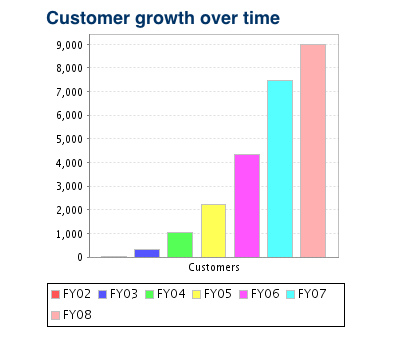
The  ) – but that’s typically in the context of Software as a Service, and in the SMB (small business) market. Atlassian’s products are mostly on-premise (although they now have a hosted version of Confluence) and their primary market is the large Enterprise. Yet they pulled off what amounts to a small miracle: essentially took the download.com, tucows style model we all know as consumers, and ported it to the enterprise space.
 So what is this culture like? Tough. When he doesn’t make his numbers, Atlassian President Jeffrey Walker is forced to make up for it as ticket-scalper on the street.
  OK, joke apart, this photo was shot last August, when the entire San Francisco office went to see a
  ) I wonder when the San Francisco office will move into a winery… Perhaps
  you get the picture by now: Working for Atlassian isn’t just a job – it’s a
Recent Comments